AI

Landfort 64, Lelystad 8219AL

4025 River Mill Way
Mississauga, ON L4W 4C1, Canada

4A, Maple High Street
Hoshangabad Road, Bhopal, MP

Office 47, Oud Mehta Tower, 9th Floor, Next
to Wafi City, Umm Hurair Second, Dubai, UAE

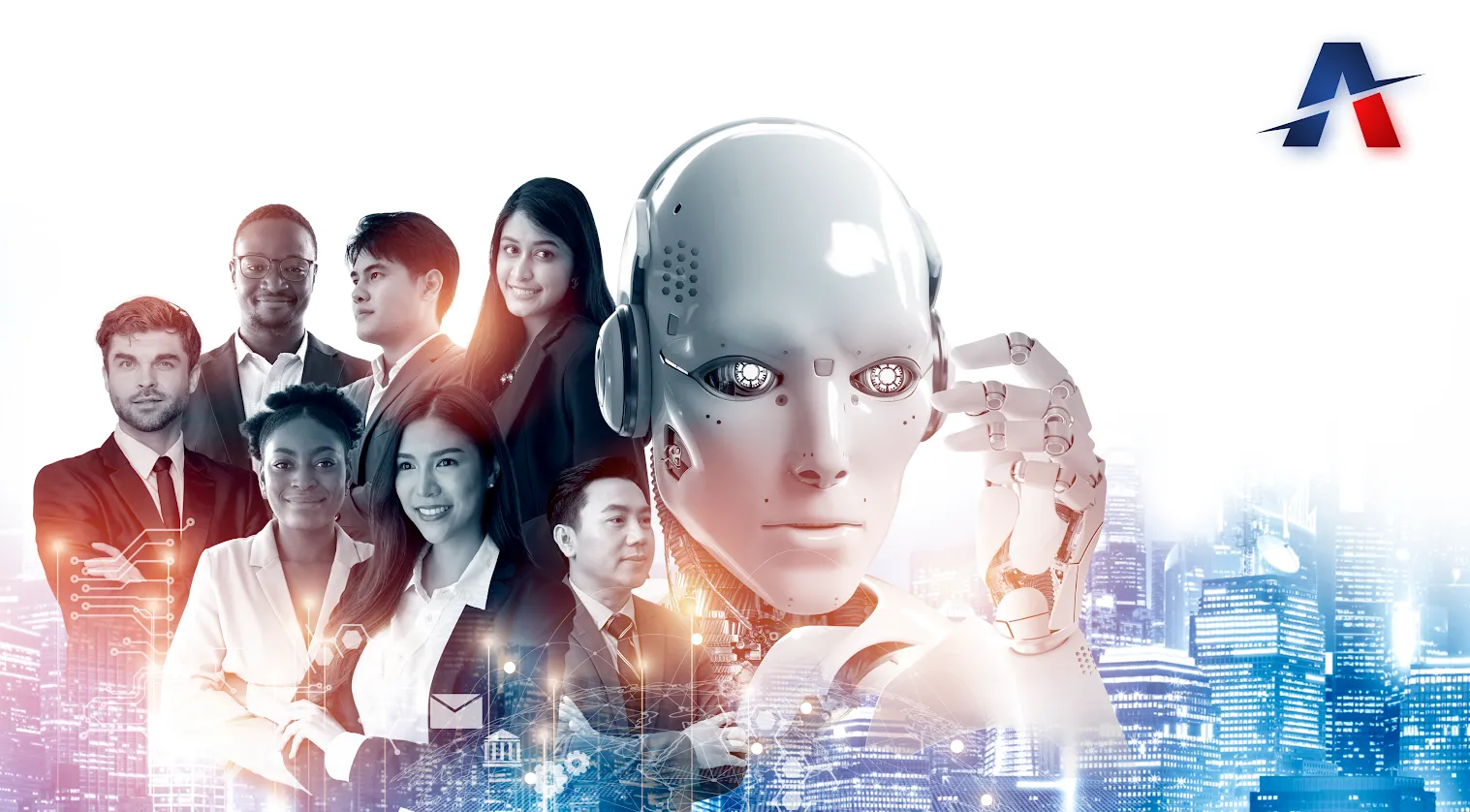
The global business landscape in 2026 has moved decisively from experimentation to expectation.
Organizations are no longer asking if they should adopt artificial intelligence; they are now focused on how to orchestrate it for measurable impact.
While 2024 and 2025 were defined by the rise of "isolated chatbots" and simple assistants, 2026 represents a paradigm shift toward the "Autonomous Enterprise."
This evolution is driven by the realization that a single, general-purpose LLM often fails to solve complex, domain-specific problems.
Instead, the winning strategy involves deploying Multi-Agent Systems (MAS) coordinated teams of specialized AI agents that communicate, share context, and execute multi-step workflows with minimal human intervention.
For businesses seeking to thrive in this era of constant disruption, understanding the transition from "bots" to "agents" is a strategic move.
Let’s understand how to get it done.
A standard chatbot follows a linear, reactive logic: a user provides a prompt, and the model generates a response.
In contrast, an AI agent is a proactive entity capable of goal-directed behavior.
When multiple agents are integrated into a single ecosystem, they operate like a professional team delegating tasks, negotiating outcomes, and resolving conflicts to achieve a shared objective.
Research from Gartner indicates that by the end of 2026, 40% of enterprise applications will feature task-specific AI agents, a staggering increase from less than 5% in 2025.
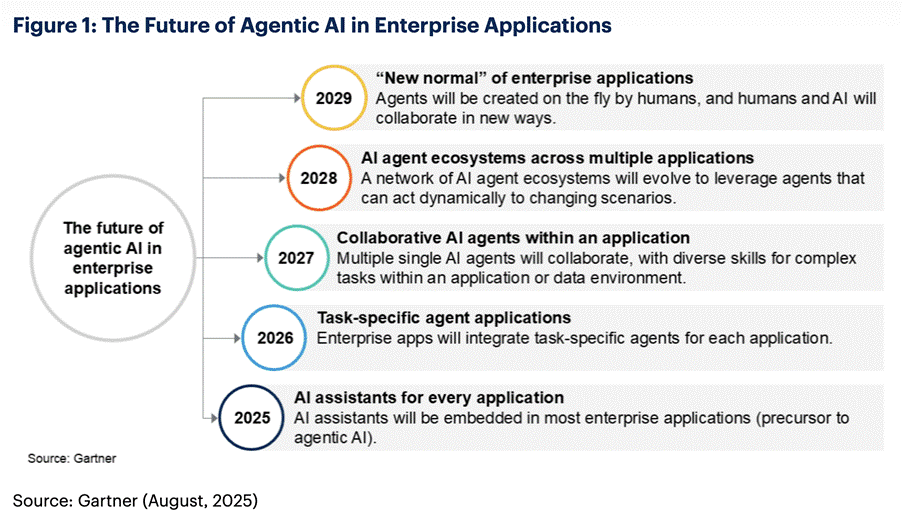
This transition signifies that AI is no longer just a "bolt-on" feature but the foundation of how information flows through an organization.
Feature | Legacy Chatbots (2024-2025) | Multi-Agent Workflows (2026) |
Logic | Fixed rules or single-prompt reaction | Autonomous, multi-step reasoning |
Data Usage | Static retrieval (RAG) | Real-time streaming and analytical layers |
Complexity | Simple queries and content generation | Distributed resource scheduling and optimization |
Human Role | Task executioner | Strategic orchestrator |
Building a coordinated agent ecosystem requires a shift in technical perspective.
Here’s how to design the robust orchestration layers.
One of the most significant advancements in 2026 is the standardization of agent communication.
Protocols like the Model Context Protocol (MCP) by Anthropic and Agent-to-Agent (A2A) by Google have removed the need for custom integrations.
In case, you’re interested, here’s the announcement from Anthropic team for MCP - The Model Context Protocol (MCP)
These standards allow agents from different vendors to tap into real-time data and negotiate work across systems seamlessly.
For developers, this means agents can now access external resources from CRM records to IoT sensors without centralized oversight, mirroring the way human departments interact via APIs and shared documentation.
For a multi-agent system to be effective, context must persist across the workflow.
In 2026, architectures rely on "In-thread" and "Cross-thread" memory -
In-thread memory allows a billing agent to remember what a routing agent has already discussed with a customer.
The cross-thread memory ensures that user preferences persist across multiple weeks of interaction.
This "long-term memory" is often achieved by converting unstructured resources (PDFs, transaction logs, meeting transcripts) into embeddings that act as the system’s canonical knowledge base.
As agents become more independent, the complexity of their interactions increases.
Managing "noise" or uncertainty in multi-step decision-making is critical.
In technical environments, such as sports analytics or autonomous logistics, the Kalman filter is frequently used to provide precise state estimation.
Mathematically, it predicts the state of a system x at time k based on noisy measurements:
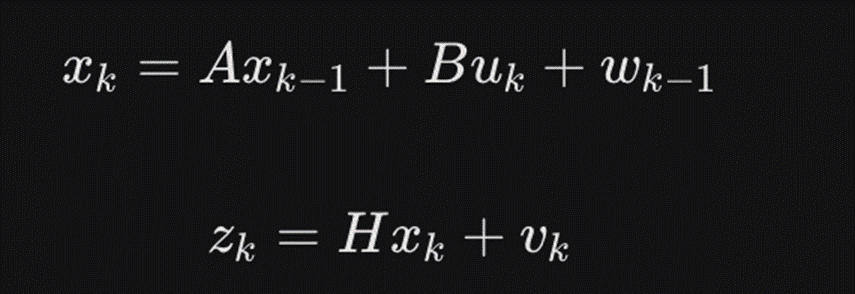
In a multi-agent productivity tool, similar mathematical logic ensures that if one agent fails to provide accurate data (process noise w), the orchestration layer can adjust and maintain system stability.
The impact of orchestrated agent networks is quantifiable, with businesses reporting 27% faster operational throughput and significant reductions in manual labor.
Traditional Procure-to-Pay (P2P) cycles are notorious for bottlenecks.
In a multi-agent setup, specialized agents handle different pillars of the process:
A Detection Agent monitors incoming invoices and flags anomalies.
An Orchestration Agent triggers the payment or escalates exceptions to a human manager.
This parallel execution allows for 60-80% faster processing times compared to sequential manual workflows.
In 2026, customer-facing agents have evolved into "Autonomous CX Workers."
Instead of a single chatbot trying to answer every question, a routing agent directs queries to specialists, one for technical support, one for billing, and another for loyalty rewards.
These agents can proactively trigger backend actions, such as initiating a return or adjusting a credit line, without the user ever leaving the interface.
The biggest risk to AI success is building a complex system that nobody needs.
To avoid this, businesses should adopt a strategic implementation framework.
Focus on workflows that are currently fragmented across disconnected backend tools.
If your employees are spending 30% of their day switching between CRMs, email, and project boards to update records, this is a prime candidate for agentic automation.
Define the specific roles your agents will play.
Are they "task-specific" (handling a single job) or "orchestration" agents (managing other bots)?
Small, focused teams of 3-7 agents per workflow are generally more effective than massive, generalist systems.
AI is only as good as the data it learns from.
Businesses must unify customer interactions from every touchpoint into a single canonical record.
As a Microsoft AI Cloud Partner, the team of AI experts at Evangelist Apps emphasizes that "Practical AI adoption" begins with putting these data foundations in place.
Choose a high-impact use case with a clear ROI such as AI-assisted support triage or predictive lead scoring.
Ship an imperfect version quickly (targeting a 5-8 week timeline) and use real-world feedback to refine the agent behaviors.
A profound insight for 2026 is that AI is not replacing jobs; it is a "complete inversion of how information flows in an organization."
Instead of humans retrieving data, "tokens" are delivered directly to the point of need.
This shift requires leaders to redesign work itself.
Employees must transition from being "task executioners" to "orchestrators" who supervise specialized AI teams.
This change addresses the growing issue of "digital burnout," allowing humans to focus on high-impact work like creative thinking, strategic planning, and building deeper client relationships.
Organizations that fail to provide AI consulting and skills for their workforce risk falling into the "confidence gap," where leaders are optimistic about the tech but unsure how to drive value from it.
As we move deeper into 2026, the maturity of the framework ecosystem including tools like Microsoft AutoGen and IBM watsonx makes multi-agent systems a practical reality for businesses of all sizes.
To ensure your organization is ready for the move beyond chatbots, use this final checklist:
Audit Disconnected Tools: Identify where "operational drag" is slowing down your team.
Establish Governance: Define clear decision logic and audit trails for autonomous agents.
To make the organization more process oriented, smooth and streamlined use a AI-powered productivity tools to streamline tasks from CXO level to interns.
The era of developer-only app creation is ending; the era of agentic orchestration is just beginning.
By leveraging coordinated AI teams, businesses can finally unlock the 10x productivity gains that were promised at the dawn of the generative AI revolution.